
If you’ve been trying to improve your drawing skills, you probably already know that progress rarely happens in one giant leap, nor in a linear trajectory.
Table of Contents
In fact, improvement happens in small shifts: the line gets smoother, the sketch gets clearer, an idea comes quicker, an artwork finishes earlier.
Same for this post! Now I’ve updated this post for 2026. A lot of the advices here comes from my own experience of trying to improve my own art skills. But even though the ideas are similar, my views on some of their effectiveness have changed a bit. For the others, I have more to elaborate.
In this updated guide, some of the tips are practical, some are mindset-based, and some are about building your presence in the world of artists.

See how ideas manifest into comic story and art
Before you start reading!!!
I know a lot of you are perfectionists. You want to research on the best tips, use the most efficient techniques, and look for as many information as you can. Basically prepare everything before you actually start drawing your next art.
Please know that there is no “perfect” formula. Not on the tutorials you’ve seen, nor on my blog posts here (Yes, I’m admitting this too).
This collection of tips are here to help you, not chain you down on to-do list. Whether you’ ejust starting out or trying to level up after years of drawing, I hope this gives you something useful to take with you.

So here we are—35 easy and effective ways to level up your drawing skills in 2026.
For easier reading, I’ve broken them into four parts: General Preparation, Study Techniques, Mindset, and a special section of Making Your Place in the World.
So grab your favorite pencil (or stylus), get comfy, and let’s dive into the wonderful world of drawing.
Part I: General Tips
This first section is about building a solid foundation. Before worrying about advanced techniques or a “perfect” style, it helps to get clear on your tools, goals, habits, and the way you observe the world around you.
1. Embrace the Tools You Have
With advancements in technology, digital drawing tablets and software like Wacom Cintiq Pro and Adobe Fresco offer incredible features. It’s very tempting to get one in hopes that it will magically improve your skills.
The videos and articles about comparing the newest models of drawing display- are for people who are looking to buy the product already. Maybe their tablets are broken or they decided to dive into digital art for the first time. If you didn’t feel the need to buy a new tech, simply don’t let those business marketing change your mind.
The truth is, you don’t need the fanciest tools to create amazing art—what matters is how you use what you’ve got. Whether it’s a basic pencil and paper, a ballpoint pen, or a budget-friendly tablet, the key is to focus on improving your skills rather than chasing expensive supplies.
Some of the greatest artists started with humble tools, proving that creativity isn’t about the medium. It’s the artist that creates the magic!
2. What is Your Goal?
The internet is overflowing with tutorials, but without a clear goal, you’ll get lost in the noise.
After following hundreds of “Beginner’s Tutorial” videos, you might not have even started to create a complete artwork for yourself. Worse yet, you might freeze without a tutorial voice nearby to guide you.
Ask yourself:
- With all the practices and preparations, what artwork are you planning for?
- What kind of art do you want to create?
- Do you want to tell stories, express emotions, or design cool concepts?
Write these answers down. Your goal is your compass—it keeps you on track as you learn.
3. What is Your Style? (Don’t rush if you don’t have one yet)
Finding your unique art style is like discovering your favorite coffee order—it takes time, experimentation, and lots of practice. Don’t feel pressured to define your style right away. Instead, focus on exploring different techniques, mediums, and inspirations.
Try imitating artists you admire, experimenting with genres, or blending various influences. Over time, your preferences will naturally shape a style that feels uniquely you.
Remember, your style isn’t something you “find” overnight—it evolves as you grow as an artist. So, don’t rush the process. Enjoy the journey, and let it develop organically. Your style will find you!
4. Practice with Purpose
We’ve all heard it: “Practice makes perfect.” But in 2025, let’s update that to: “Practice makes progress.”
Instead of aimlessly sketching, focus on specific areas you want to improve—like anatomy, shading, or perspective. Instead of just doodling aimlessly, set a goal for each session. Treat practice as playtime. Enjoy it!
You may want to nail down a tricky technique, get better at drawing hands, or try out a new style. Having a clear focus helps you see progress and keeps things interesting.
I was in a period where I wanted to improve figure drawing. So I just looked up figure drawing practice, where I got to choose model photos for references, or timed exercises on YouTube.
5. Mindful Observation
Spend time observing your surroundings and pay attention to details like textures, shapes, and colors.
This practice can improve your ability to capture realism in your drawings: the way light dances on surfaces, the unique shapes of everyday objects, or the subtle shifts in color. This isn’t just about looking; it’s about understanding what you see.
If you’re like me, whose foot pace is a bit too fast to look at things closely (there’s even research on Hong Kong people’s walking speed!). I suggest using your phone camera to capture images you find interesting on your path.
That way, you can find some free time to sit down and study the photo properly.
6. Keep a Dedicated Sketchbook
Your sketchbook is more than a tool—it’s a creative diary. Choose one you love (even a plain one will do) and commit to drawing in it daily. Half a page a day = one filled sketchbook in months!
Don’t worry about making everything perfect—this is your place to be messy and creative.
Pro Tip: Flip through your old sketchbooks occasionally. It’s a great confidence boost to see how far you’ve come.

7. Incorporate Storytelling
You probably know that character portrait is an extremely popular genre for digital artists. But just drawing a smiley face over and over seems a bit repetitive right? To dive deeper, who are the characters? What have they gone through? What emotions are they feeling, and why?
Just like the old classics Mona Lisa and The Girl with the Pearl Earrings, there’s no need to illustrate specifically what’s happening, but people are still drawn to think about what these characters are thinking. Because the artwork convey such emotions (and mystery!)
So use your drawings to tell a story. This can add depth and meaning to your work, making it more engaging for viewers.
8. Capture Inspiration Whenever It Strikes
Inspiration doesn’t wait—it strikes randomly, like in the shower or during your morning coffee. Keep a small notebook or use a notes app on your phone to jot down ideas.
These notes are lifesavers when you hit an artist’s block. Inspiration bank? Check.
Check out my shop for free and downloadable art-related goodies
Part II: Techniques
Once your foundation is in place, the next step is learning how to train your eye and hand more intentionally. These tips are about the practical side of improvement: studying structure, using references, experimenting with composition, and making your practice sessions more effective.
9. Study Anatomy
Even if you draw stylized characters, understanding anatomy is crucial. It helps you create believable poses and movements. Websites like Proko are fantastic for learning anatomy.
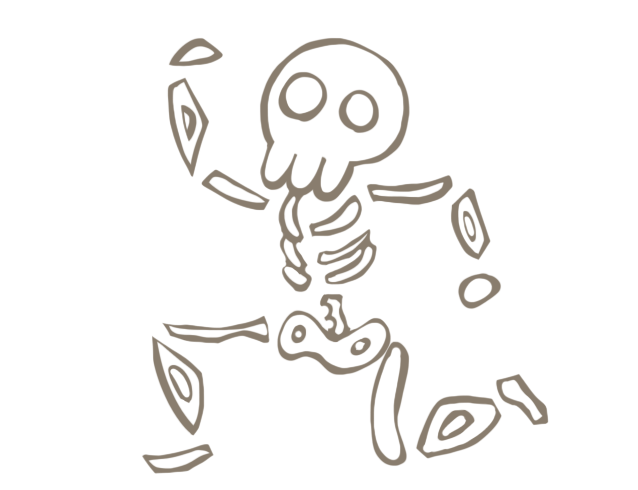
Try sketching skeletons or muscle groups to get a feel for it. This knowledge will help you create more lifelike and expressive characters in your art.
To start with, I suggest learning about large muscles like pecs, abdomen, and thighs. Smaller muscles like hands and facial muscles can be learned in more advanced stages, as they are more complicated and drawn less often.
10. Explore New Subjects
Step out of your comfort zone by drawing subjects you’re unfamiliar with. This will broaden your skills and keep your work fresh—mix it up!
Exploring new subjects can spark creativity and keep things fresh. If you usually draw portraits, try landscapes or still life. Love drawing animals? Give architecture a shot. This variety not only broadens your skills but also keeps you excited about creating.
And when you suddenly need to draw a background for your characters, you’ll thank your past self.
11. Use References (Always!)
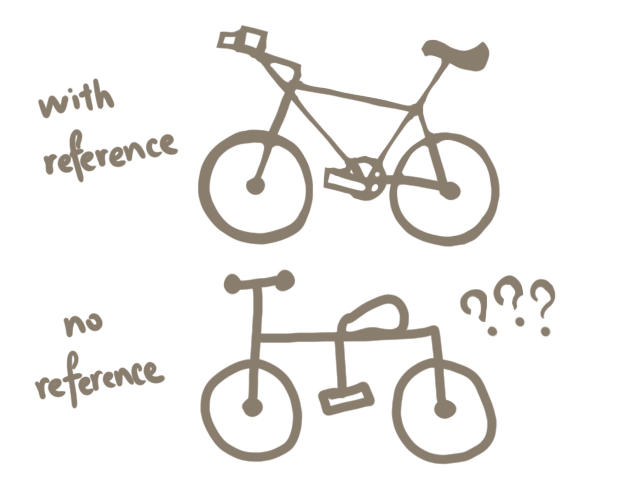
References aren’t cheating—they’re tools. Even the pros use them. Whether it’s a photo, a 3D model, or an object in front of you, references guide you to draw more accurately.
Can’t draw a bicycle? Don’t guess—look it up. Save time and improve faster. It’s also a way to “Learn smart, not hard”.
12. Balance Detail and Simplicity
Learn when to add detail and when to simplify. This balance can enhance the overall impact of your artwork. The idea is the “Focal Point”.
What is the most important thing in your artwork? Highlight those elements. For example, in a portrait, emphasize the eyes and expression, while keeping the background simple.
This approach draws attention to the focal point and creates a more engaging composition. Experiment with different levels of detail to see what works best for your style.
13. Start with Big Shapes
Don’t dive into details right away. Block out your composition with big shapes first. Think of it as building a house—you need a solid structure before adding the decor. Many amateurs get stuck in a small area for hours, worrying it may look bad.
For instance, if you’re drawing a person, sketch out the basic shapes of the head, torso, and limbs first. Once you’re happy with the overall structure, you can refine and add details.
This method keeps your drawings well-proportioned and makes the process less daunting, especially for complex subjects.

14. What is Color Theory?
Color theory is all about understanding how colors work together. It’s like a secret weapon for creating harmonious and striking art.
Learn about the color wheel, complementary colors, and how different hues evoke emotions.
For example, using warm colors like red and orange can create a sense of energy, while cool colors like blue and green can be calming.
Experiment with color schemes to see how they affect the mood of your piece. Mastering color theory can take your art to the next level.
15. Experiment with Dramatic Lighting
Dramatic lighting adds mood and depth to your art. Think glowing highlights, deep shadows, and vibrant colors.
For example, try drawing a portrait with a single light source, like a candle or spotlight, to see how it changes the scene. This technique can highlight certain features and add a sense of drama.
Pro Tip: Use an overlay layer in digital art to quickly add dramatic lighting effects.
16. Use Time Exercises
Time exercises are a fun way to boost your drawing speed and confidence. Set a timer and challenge yourself to complete a sketch in a short period, like 5 or 10 minutes.
This pushes you to focus on the essentials and not get bogged down in details. For example, try quick gesture drawings of people in motion to capture their energy and movement.
These exercises help you loosen up and improve your ability to capture the essence of a subject quickly.
17. Explore Different Perspectives
Challenge yourself by drawing from unusual angles, like a bird’s-eye view or a low-angle shot (worm’s-eye view). Pinterest is a goldmine for perspective references—use it!
Playing with perspective can create a sense of depth and interest, making your work stand out. Don’t be afraid to get creative and push the boundaries of how you see and represent the world.
18. Experiment with Scale
Speaking of perspectives in the last point, there’s another way to experiment: contrast in scale. This can help you understand proportion and composition in new ways.
Have you seen artwork where a small boy is standing in front of a giant, intimidating mansion? Or a knight looking at the vast view of a castle, realizing how small he is?
This kind of experimentation can spark creativity and lead to unexpected results. It’s a fun way to break out of your comfort zone and explore new artistic possibilities, adding a whimsical touch to your work.
19. Learn by Imitating
“Steal like an artist,” as Austin Kleon says. Study your favorite artists’ work to understand their techniques. Over time, you’ll develop your own unique style.
This isn’t about copying, but rather understanding different approaches and incorporating them into your own art. Over time, you’ll blend these influences into a unique style that’s all your own.

See how ideas manifest into comic story and art
Part III: Mindset
Technical skill matters, but so does the way you talk to yourself while learning. The next section is about mindset — the part of improvement that keeps you going when progress feels slow, messy, or uneven.
20. Reflect on Your Artistic Journey
Take time to look back on your progress and see how far you’ve come. Reflecting on your artistic journey helps you appreciate your growth and identify areas for improvement.
It’s a great way to stay motivated and inspired, reminding you of your passion and dedication.
You’ve been through at lot, and improved a lot!
21. Practice Patience
Artistic growth takes time. Be patient with yourself and recognize that improvement is a gradual process. Skills develop gradually, and rushing can lead to frustration.
One suggestion is to focus on the artwork you’re currently working on. Instead of anxiously anticipating for a gig or a milestone that is outside of your control, enjoy the present and the work you make today.
22. Embrace Failure
Art is not a zero-sum game, so it can be hard to imagine what “failure” is in this context. But have you ever felt these creeping thoughts of “maybe I’m just not good enough”?
Intermediate artists are especially at risk of falling into this trap. Because their standards have developed a lot and yet their skills may not be fast enough to catch up.
Here’s the secret: even the most accomplished artists have faced setbacks, Imposter’s Syndrome, or self-doubt in some ways. Instead of getting discouraged, view failures as stepping stones toward success.

23. Cultivate Curiosity
Stay curious and eager to learn. Explore new techniques, styles, and mediums to keep your creativity alive.
Personally, I think this is a great way to counter the anxious, envious thoughts when seeing beautiful artwork created by other artists.
“How did they arrive to this beautiful work? What steps or techniques or reference did they take?” Then you might arrive at the conclusion: “I can do it too!”
24. Maintain a Growth Mindset
As I said above, the art world is not a zero-sum game. Adopt a growth mindset by believing in your ability to improve through effort and learning.
This mindset encourages perseverance and resilience. Because you believe in your ability to develop your skills through dedication and effort, any obstacles are just opportunities for you to get better!
25. Let Go of Perfectionism
Perfection is a myth. On the other hand, it can stifle creativity and hinder progress. As overworking a piece can make it worse.

Embrace the uniqueness of your work and learn from each piece. Letting go of perfectionism frees you to experiment and grow as an artist.
Focus on progress, not perfection.
26. Balance Passion with Rest
Once in a while, Step away from your work to recharge and gain fresh perspectives.
While passion drives creativity, it’s important to take breaks and rest. This balance prevents burnout and keeps your mind fresh.
Even more, a healthy mind and healthy body can boost your efficiency and learning progress!

27. Let Your Hand Flow
This can both be a “technique” and a “mindset”. At the end of the day, confidence is what allows some artists to pick up a brush instead of a pencil, then draw stroke after confident stroke on a paper.
Avoid stiff, hesitant lines. Practice confident strokes by moving your arm, not just your wrist. Even if it’s messy, your artwork will feel more dynamic.
28. Celebrate Small Wins
One of the reasons you’re reading this article- is probably because you care about your art, right? You’ve paid much effort to arrive at this stage today. So good job!
Be it winning an art contest, finishing an artwork, or drawing an improved hand compared to the last, acknowledge and celebrate your progress, no matter how small!
29. Enjoy the Process
At the end of the day, drawing should make you happy. Whether it’s a hobby, passion, or career, let your love for art fuel your growth!!!

Check out my shop for free and downloadable art-related goodies
Part IV: Making Your Place in the World
As your skills grow, it also helps to think about how your art fits into a bigger creative life. These last few tips are about showing your work, finding feedback, building consistency, and slowly making your place in the art world.
30. Create a Portfolio
Building a portfolio is essential for showcasing your best work. Select pieces that highlight your skills and unique style.
A well-curated portfolio not only helps you track your progress but also opens doors to opportunities, whether it’s applying for jobs, commissions, or sharing your art with a wider audience.
This not only showcases your skills but also helps you track your progress over time.
31. Stop Comparing Yourself to Others
Comparing yourself to other artists can be discouraging. Remember, everyone’s journey is unique, and progress happens at different rates.
Focus on your own growth and celebrate your achievements. By appreciating your individuality, you’ll find more joy in your art and stay motivated to improve.
32. Join Art Challenges
Constructive criticism from peers or mentors can provide new insights and help you improve. Art challenges like Inktober, MerMay, or monthly Instagram prompts are great for motivation.
They push you to create consistently and share your work. Even if you miss a day, keep going. Progress > perfection.
33.Seek Feedback
You don’t need to enroll in expensive critique courses (though they help!). Ask friends, family, or online communities for feedback.
They’ll spot things you might miss, like awkward proportions or unclear expressions. Fresh perspectives are invaluable.
34. Stay Updated with Trends
This may sound shallow, but when you think about it- it is one effective way to engage with other artists and build rapport.
You don’t necessarily have to follow every trend, but by knowing what’s popular, you might find opportunities that can both inspire you, and bring audience to your work.
For example, #DTIYS (Draw this in your style) challenges can still allow every artist to stay true to your style. Use them as inspiration to evolve your work in your own way.
35. Stay Consistent
Last but not least, consistency is key to improving your art. Make regular practice a habit, even if it’s just a few minutes a day.
This steady commitment helps you refine your skills and develop your style over time. By staying consistent, you’ll see continuous progress and build confidence in your artistic abilities.
Conclusion
Improving your drawing is not about becoming perfect. It’s about building enough skill, confidence, and consistency that making art starts to feel more natural over time.
Some of these tips may help you immediately, while others may make more sense later when you revisit them. That’s okay. Growth in art is rarely linear. You may not notice change from one day to the next, but if you keep showing up, you will eventually look back and realize how far you’ve come.
If one tip stood out to you, try applying it in your next drawing session. If more than one did, even better. The point is not to do everything at once — it’s to keep moving, keep experimenting, and keep making work that teaches you something.
Thank you for reading to the end!!!
If you enjoyed this post, you can continue exploring my art journey through my comic pages. This comic is drawn over the course of 1 year! See if you can spot the change in technique, despite my attempt to stay consistent with the style.
Or- you can join my email list for future updates, freebies, and new posts!

How do you comment on this thing?
Ey, you did it~! Comments here need to wait for approval because of both spams and some bugs.
im hoping this will work with my skill
is this cherry guy real guys
Hiiii, thanks for writing this, I really REALLY want to learn how to draw but it’s difficult for me. I will keep on learning and improving my art everyday thank you really much. God bless you!
I notice I tend to spend 40 minutes to 3 hrs on a single sketch. Instead, I should I try to not focus on the tiniest details and save those for later.
I’m also aiming to create a better schedule; I get burnt out way too easily =(
Thanks! I often try to rush since some progress in a year more than I do, but because of this, I can finally just enjoy learning!